

Fresno Is a Top-Five City — Time to Act Like One
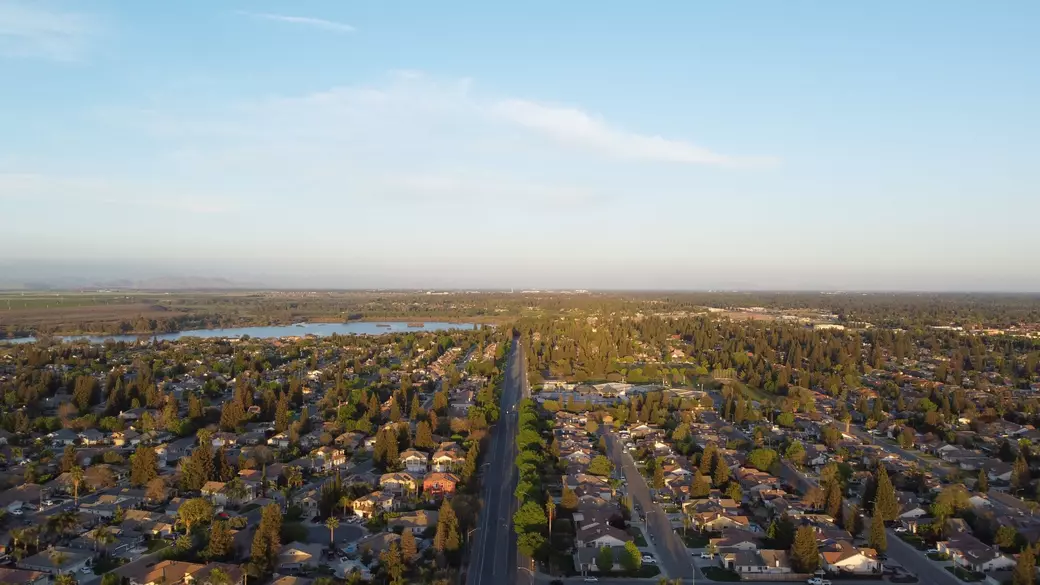
Fresno Is a Top-Five City — Time to Act Like One
If you’ve been following local debate lately, it probably feels like Fresno is standing at the edge of a cliff.
City Council chambers packed. Heated testimony from parents, educators, and residents. A proposed 9,000-acre development—SEDA—framed as either Fresno’s salvation or its undoing.
But here’s the uncomfortable truth many of us sense even if we haven’t quite articulated it yet: The issue making the most noise isn’t the issue we need to be paying attention to.
SEDA didn’t create Fresno’s challenges. It revealed them.
This isn’t about one project, one vote, or one group winning. It’s about a slow drift—families moving away, school enrollment dropping, and the city losing ground economically and socially. And the idea that doing nothing will somehow preserve our status quo? That’s a comforting myth we can no longer afford.
1. Doing Nothing Isn’t Neutral — It’s Already Happening
One of the most misleading ways this debate gets framed is as “growth versus no growth.” As if rejecting a development like SEDA somehow freezes Fresno in place and protects our stability.
That’s not how real life works.
Families are already leaving Fresno’s core. Not hypothetically, not “if this happens,” but right now. They’re moving to Clovis. Madera. Sanger. Other neighboring districts that promise better performing schools, newer homes, and what feels like upward mobility.
That migration has consequences. When people leave:
- Population growth slows;
- The tax base erodes;
- City services become harder to fund;
- Neighborhoods lose vibrancy over time.
This isn’t dramatic hyperbole. It’s demographic momentum.
So when we talk about “doing nothing,” we need clarity: Doing nothing is already a choice with consequences.
2. Schools Are the Emotional Center — But Not the Legal One
Schools sit at the emotional core of nearly every Fresno neighborhood, and that’s understandable. They shape daily life, community identity, and most importantly, they shape decisions parents make about where they live.
But it’s critical to acknowledge something most discussions gloss over: The City of Fresno and the local school districts are completely separate entities. They have different governing boards, different revenue streams, and different legal responsibilities.
The city cannot fix academic performance. The school district cannot direct where the city approves housing. Those boundaries exist for legal and structural reasons, not political convenience.
Under state law, developers pay school impact fees to the districts where construction is planned. Once those fees are paid, the city cannot deny a housing project based on its anticipated impact on school enrollment or performance.
This legal reality gets lost in emotional testimony—especially when people fear schools closing or being underutilized—but it matters. Confusing authority with accountability directs energy at the wrong target.
3. Families Are Voting With Their Feet and Their Wallets
This part deserves blunt honesty: Fresno and Clovis are geographically adjacent. They share the same access to jobs, services, highways, and daily conveniences. The difference families respond to isn’t about geography. It’s about schools and perceived quality of life.
When two nearly identical homes sit minutes apart, but one is in a district parents believe offers better opportunities, markets respond.
This isn’t ideology. It’s economics. Over the past decade, neighborhoods zoned for higher-performing schools have consistently commanded premiums in home value. Parents don’t wait for solutions; they make choices based on today’s realities.
Every family that chooses a neighboring district’s boundary doesn’t just take one student with them. They take long-term tax revenue. Civic engagement. Household spending. Future investment. That’s not abstract — that’s economic gravity in action.
4. The Challenge for Fresno Unified Is Real — and Inward
This is one of the hardest truths to state, but here it is carefully and respectfully: Fresno Unified’s enrollment trends reflect longstanding perceptions of educational outcomes and opportunities. That perception matters because real estate markets do not ignore it.
Yes, losing students hurts. Yes, closures are painful. And yes, every student deserves access to excellent education. But it’s also accurate to acknowledge that many families view alternative districts as more competitive options — and they’ve been acting on those views for years.
This isn’t about blame. It’s about clarity: if FUSD wants to slow or reverse enrollment loss, simply blocking development isn’t a strategy — it’s a pause.
Instead, the district must grapple with the real question families are answering at kitchen tables across our region:
“What makes this district worth choosing?”
Communities like Madera, Clovis, Central, and Sanger aren’t just offering new homes. They’re offering an education promise that feels stronger to many families. If FUSD wants to compete regionally, the district needs its own coherent, accountable plan — one that goes beyond defense and towards collaboration and innovation.
Models like the Center for Advanced Research and Technology (CART) show that districts can work together to create opportunities that attract students. But those efforts must be pursued proactively, not reactively.
5. Fresno’s Growth Problem Isn’t a Lack of Land — It’s a Lack of Strategy
One of the most persistent myths in local planning is that Fresno has run out of places to build homes. That’s not true. There are still viable pockets of land within the city that could support well-designed, community-enhancing residential development.
When projects like the one at Herndon and Valentine get stopped — not because they were poorly conceived, but because residents feared congestion, noise, or change — it highlights a fundamental dynamic:
Three groups want a voice in growth:
- Educators and school advocates concerned about capacity and outcomes.
- City leaders tasked with planning, infrastructure, and budgets.
- Residents deeply invested in livability, neighborhood character, and quality of life.
Each group’s concerns are real. But when one vocal constituency blocks progress without a shared framework for moving forward, the net effect is often stagnation — not community preservation.
That’s why a practical, semi-solution like the 4-to-1 housing framework deserves attention.
What Is the 4-to-1 Framework?
Under this approach, for every four homes approved in new growth areas at the edges of the city, developers would be required to build one home as an infill project within the existing city limits. Importantly, this refers to houses — not just units — supporting family-oriented neighborhoods with long-term value.
This isn’t a punitive restriction. Instead, it’s an incentive alignment strategy:
- Developers get predictable paths on new land while contributing meaningfully to the urban core.
- Residents see investment in neighborhoods that already have schools, streets, and community fabric.
- City leaders gain long-term tax base stability and a mechanism to slow outward retreat.
- Schools benefit indirectly from a more balanced population distribution.
The goal isn’t to stop growth. It’s to shape it so that Fresno doesn’t hollow out from the inside while expanding outward.
And it matters because stalled projects don’t stop growth — they just push it into other jurisdictions. When that happens, Fresno loses influence over outcomes that directly affect residents’ daily lives.
6. This Issue Is Bigger Than SEDA — That’s the Point
SEDA may move forward. It may not. Either way, it won’t change the underlying forces reshaping Fresno.
People are making choices every day about where to live, raise families, and build their futures. Those decisions are shaping the city more than any single policy battle ever could.
If Fresno Unified leadership and supporters can pack City Hall to influence a Council vote, then city officials should feel just as compelled to show up — in force — at Fresno Unified board meetings. Not to escalate conflict, but to ask the difficult questions about strategy, enrollment, and long-term competitiveness.
FUSD has a challenge it controls. Fresno has a challenge it must solve. And neither gets better by talking past each other.
Fresno is a top-five city in California — a title that carries expectations. It’s the anchor of the Central Valley. We deserve to act like it. Build like it. Expect more of ourselves like it.
Because cities don’t decline all at once. They decline one family decision at a time.
Doing nothing won’t preserve what we love about Fresno. But thoughtful, strategic action — imperfect though it may be — gives us our best shot at a future worth choosing.
Categories
Recent Posts









GET MORE INFORMATION
