

What the Flock? What Flock Cameras Are and Are Not
What the Flock? What Flock Cameras Are - and Are Not
Fresno's automated license-plate readers can help investigators locate stolen vehicles, identify suspect vehicles, and develop leads after serious crimes. They also raise reasonable questions about privacy, ICE, data sharing, accuracy, and whether a local camera can become part of a much larger surveillance network.
Flock cameras are automated license-plate readers that photograph passing vehicles and record the plate, visible vehicle traits, camera location, and time. Police use recent sightings as investigative leads. The cameras do not identify the driver or use facial recognition, but access, sharing, retention, verification, and auditing still matter.
The phrase police surveillance camera can end a productive conversation before it begins.
One person hears "surveillance" and imagines a permanent government record following every resident. Another hears "public safety" and assumes anyone asking questions must be against police or unconcerned about crime.
Neither reaction gives Fresno residents enough information.
Flock cameras are not a nothing-burger. A searchable vehicle sighting can materially change how quickly investigators locate a stolen car, reconstruct a shooting, find a kidnapping suspect, or identify a vehicle leaving a homicide scene.
At the same time, a large network of cameras can become more powerful than any single camera, especially when agencies share access across jurisdictions.
At All Elite Homes, we lean in favor of Fresno retaining effective public-safety tools when their value is demonstrated and their use remains narrow, verified, auditable, and accountable. Residents should not have to choose between supporting good police work and asking reasonable questions about a powerful database.
We spend our time throughout Fresno and the Central Valley listening to what people value about their communities. Safety is not merely a crime statistic. It is whether someone feels comfortable visiting a park, driving home after dark, attending a game, opening a business, or letting children enjoy the city around them.
That makes this more than a police-technology story. It is a Fresno quality-of-life story.
How ICE Turned a Police Camera Debate Into a National Trust Issue
ICE became the catalyst that moved Flock from a specialized law-enforcement technology discussion into a wider national controversy. The deeper issue is whether data collected locally for one purpose can quietly become available for another.
Privacy advocates questioned the scale of the network
Automated license-plate readers had faced criticism for years because they record vehicles connected with crimes alongside the much larger number of vehicles driven by people who are not suspected of wrongdoing.
Indirect federal searches made the concern concrete
Reporting showed that some California agencies conducted license-plate searches connected with ICE, Customs and Border Protection, or other federal investigations. A federal agency did not necessarily need its own Flock login if an authorized local user searched on its behalf.
State restrictions did not prevent every questionable search
California restricts sharing automated license-plate-reader information with federal and out-of-state agencies. Reports of searches that appeared to violate those restrictions damaged confidence in the promise that locally collected data would remain under local control.
A local renewal decision met a national credibility problem
Fresno's grant-funded program is nearing the end of its current cycle while national scrutiny has intensified. Residents are therefore asking whether Fresno's safeguards are technically, contractually, and operationally strong enough to prevent problems reported elsewhere.
ICE brought Flock into the national spotlight. The larger controversy is whether information collected by one city for stolen vehicles, shootings, or kidnappings can escape its original purpose through a broader network.
Chief Mindy Casto has said Fresno does not share its Flock information with ICE or other federal agencies. Based on the public information reviewed for this guide, no evidence has been presented showing that Fresno Police improperly shared its Flock information with ICE.
That distinction matters. Residents can examine whether misuse is possible without accusing Fresno personnel of misconduct that has not been established.
Across our team at All Elite Homes, we believe Fresno should be evaluated through its documented local practices, not automatically blamed for every national controversy. National failures are still legitimate reasons to test whether Fresno's safeguards are strong enough.
Fresno's Flock System: What Is Known and What Still Needs Proof
Fresno uses approximately 70 Flock cameras. Police leaders say routine sightings are deleted after 30 days, the system does not use facial recognition, and information is shared with 24 other California law-enforcement agencies rather than federal agencies.
| Issue | Fresno's stated practice | The next reasonable question |
|---|---|---|
| Camera placement | Locations are selected using prior shooting and stolen-vehicle information. | Are locations periodically reviewed as crime patterns and community needs change? |
| User access | Trained personnel receive role-based access. Patrol officers reportedly have less access than detectives and investigative teams. | How often are permissions reviewed, and how quickly are they removed after a transfer or separation? |
| Search reasons | Flock says historical searches require a documented reason and create an audit trail. | Are reasons specific enough to confirm a legitimate case or public-safety purpose? |
| Retention | Routine sightings are deleted after 30 days unless connected with an active investigation. | How long do exported images, screenshots, reports, or evidence remain in separate police systems? |
| External sharing | Fresno says information is shared with 24 other California agencies and not with ICE or federal agencies. | Do technical settings prevent a partner agency from performing a search for an unauthorized requester? |
| Data ownership | Fresno says the department owns the collected information. Flock says customer agencies own and control their data. | Does the contract clearly restrict secondary use, subcontractor access, exports, model training, and changes to platform terms? |
A Large System Needs an Audit Large Enough to Build Confidence
Public-record reporting examined one monthly period from September 14 through October 13, 2025. During that period, Fresno's system recorded more than 21 million vehicle scans. A total of 506 active users conducted 8,318 searches.
Fresno's published audit documentation ultimately examined three randomly selected searches and found that those searches complied with department policy.
Those numbers do not prove widespread misuse. They support a reasonable question: is reviewing three searches enough to create strong public confidence about more than eight thousand searches?
Fresno Police says it conducts monthly audits and is exploring whether those audits can be released publicly. Publishing them would give residents a clearer view of search volume, the size of the review sample, policy violations, partner access, and corrective action.
Fresno's grant documents call for a final local evaluation by June 1, 2027, after the project activity period ends on December 31, 2026. If the city considers a new Flock commitment before the final report is complete, residents should receive meaningful interim results before the renewal decision.
Across our team at All Elite Homes, we see transparency as part of public safety, not an obstacle to it. A useful system becomes easier to defend when residents can see that its oversight is proportional to its size.
From License Plate to Investigative Lead: How Flock Works
The Flock cameras at the center of Fresno's discussion are automated license-plate readers. They capture point-in-time vehicle sightings from public roadways and make visible vehicle information searchable.
A vehicle passes a fixed camera
The camera records still images as a vehicle passes a specific public location. It is not the same as placing a live GPS tracker on the vehicle.
The system reads visible vehicle details
It may record the plate characters, issuing state, color, vehicle type, make, model, time, camera location, and visible features such as a roof rack.
A possible hot-list match creates an alert
A plate associated with a stolen car, wanted person, missing-person case, or specific investigation may generate an alert for an authorized officer.
Investigators search recent sightings
After a crime, investigators may search a known plate or a description such as a white pickup, dark SUV, or vehicle with a distinctive visible feature.
The Correct Mental Model
A Flock result may help investigators decide where to look next. It does not independently establish who was driving, why the vehicle was present, or whether a crime occurred.
Stolen vehicles
A verified alert may help officers locate a stolen vehicle before it is abandoned, dismantled, or used in another offense.
Violent-crime timelines
A vehicle sighting near a shooting, robbery, kidnapping, or homicide may help investigators identify where to look next.
Missing and endangered people
Plate alerts may help locate vehicles connected with missing persons, abducted children, or people believed to face an immediate threat.
Cross-jurisdiction searches
A suspect vehicle may move through several cities or states faster than traditional investigative requests can be processed.
Retaliatory violence
Identifying a suspect vehicle sooner may help investigators intervene before one shooting contributes to another cycle of retaliation.
Evidence preservation
A lead can direct investigators toward witnesses, private cameras, phones, businesses, or physical evidence before those opportunities disappear.
Digital Breadcrumbs During a Multi-State Triple-Homicide Manhunt
In March 2026, authorities were searching for a man accused of killing three women in rural Utah, stealing a vehicle, and fleeing across multiple states.
Utah public-safety officials said investigators used automated license-plate readers and the stolen vehicle's real-time theft-recovery system to follow the vehicle through southern Utah and into Colorado. A Flock representative said one of the company's readers produced an alert that helped narrow its location.
The accused suspect was arrested in Colorado less than 12 hours after the multi-state search began.
Flock did not investigate the homicides by itself, establish guilt, or physically make the arrest. The case also depended on vehicle tracking, communication between agencies, and officers acting on the information.
Across our team at All Elite Homes, this is the type of use that makes Flock's public-safety value difficult to dismiss. Privacy boundaries remain necessary, but so does the ability to locate a dangerous suspect before another person may be harmed.
What Flock Sees and What Your Digital Life May Reveal Instead
Are Flock cameras using facial recognition?
Fresno officials and Flock say the system discussed here does not use facial recognition. It records vehicle information such as the plate, color, type, visible characteristics, location, and time.
A social platform may already connect a face with the account that posted it, the people tagged, the device used, and the interactions it received. Meta has said publicly shared Facebook and Instagram posts, including photos and text, were used to train some generative-AI models.
Is Flock tracking everyone everywhere?
A camera records a vehicle at a particular place and time. It does not continuously transmit the vehicle's position like a live GPS tracker. Enough sightings across a large network can still reveal portions of a vehicle's travel pattern.
A phone can create a more continuous location picture through GPS, Wi-Fi, Bluetooth, IP addresses, app permissions, advertising identifiers, purchases, and device activity.
Does Flock know who is driving?
A plate sighting identifies a vehicle, not the person behind the wheel. A vehicle may be borrowed, rented, recently sold, used by an employee, driven by a family member, or stolen.
A platform or retail account is usually tied more directly to a person through a name, phone number, email, payment method, address, login history, device information, photographs, and purchases.
Is an ordinary driving record stored forever?
Chief Casto has said routine Fresno sightings are deleted after 30 days unless the information becomes part of an active investigation.
Search activity, purchases, photographs, account relationships, advertising interests, and device activity may remain useful to a commercial profile for much longer. The commercial internet is generally not built around a rolling 30-day memory.
Can a Flock alert be wrong?
A camera can misread a plate. A database record can be outdated. A plate can be stolen, cloned, damaged, or attached to another vehicle. Officers should confirm the plate, state, vehicle, database status, and surrounding facts before acting.
Commercial systems also experience mistaken identity, inaccurate inferences, account takeovers, data breaches, unauthorized access, and algorithmic errors.
Can an officer search anyone for any reason?
Fresno says access is limited by role and training. Flock says historical searches require a documented reason, are connected with an individual user, and create an audit trail.
A log only creates accountability when someone meaningfully reviews it.
Most consumers cannot see every employee, contractor, advertising partner, internal system, or algorithm that has used individual pieces of their platform or shopping information.
Does Flock own or sell Fresno's camera data?
Fresno says the department owns the collected information. Flock says customer agencies own and control their data and that Flock does not sell customer camera data.
Major platforms often say they do not sell personal information in the simplest meaning of the word. Their businesses can still monetize profiles through advertising, recommendations, personalization, measurement, and prediction. Some data brokers have directly sold or licensed sensitive location data.
Can ICE or another federal agency access Fresno's information?
Chief Casto says Fresno does not share Flock information with ICE or other federal agencies. Flock says ICE has no direct platform access and federal sharing is disabled by default.
Oversight should also address indirect searches performed through an authorized partner.
Social platforms, phone providers, technology companies, and online retailers may receive legally valid government requests for account, purchase, communication, device, or location-related information.
Has Flock actually reduced Fresno crime?
The available information does not prove that Flock caused Fresno's decline in shootings and murders. Fresno Police says it has assisted many recent homicide and shooting investigations, which can be valuable without explaining the entire crime trend.
Residents should look for verified recoveries, cases materially advanced, endangered people located, false-alert rates, misuse findings, investigative time saved, and outcomes supported by additional evidence.
Why should an innocent person care?
Innocent people should care because lawful movement still deserves accuracy, limits, transparency, and due process. A legitimate system can be misconfigured, expanded, breached, or misused.
Innocent people should also care when years of searches, purchases, relationships, photographs, locations, interests, and habits are combined into a persistent commercial identity.
Across our team at All Elite Homes, we do not believe commercial tracking excuses government surveillance. The comparison helps residents measure each risk based on the information collected, how long it lasts, and the consequences that may follow.
Fresno's Crime Decline Is Real, but Flock Does Not Deserve All the Credit
Fresno experienced a significant decline in shootings and murders from the pandemic-era peak. The change provides important context, but it does not prove that one camera program caused the improvement.
| Year | Murders cited | Shootings cited | Flock context |
|---|---|---|---|
| 2020 | 74 | 732 | Before Fresno's current grant-funded Flock deployment. |
| 2025 | 22 | 162 | Flock was operating as one part of Fresno's broader public-safety strategy. |
Figures reflect numbers cited by Chief Mindy Casto during the July 2026 public discussion. Definitions and final classifications can vary. The comparison provides context and does not establish that Flock caused the decline.
Local reports have cited different homicide percentages, including 71% and 79%, while consistently reporting that Flock furthered 39% of shooting investigations. The most responsible summary is that Fresno Police says the system has furthered roughly three-quarters of recent homicide cases and 39% of shooting investigations.
Fresno's improvement reflects detectives, patrol officers, firearm seizures, gang investigations, intervention programs, witnesses, prosecutors, community cooperation, and several investigative technologies. Flock may contribute without being the sole or primary cause of the decline.
Flock does not need to receive all the credit to have value. If it helps identify a vehicle sooner, preserve evidence, interrupt retaliation, or locate a suspect before another person is harmed, that contribution matters.
Across our team at All Elite Homes, we care about the full picture of Fresno, not merely home prices or transaction totals. A city feels more welcoming when serious crime declines and residents believe the institutions contributing to that progress are both effective and trustworthy.
A 30-Day Police Record Versus a Years-Long Digital Profile
Comparing Flock with social media, phones, retailers, and data brokers is useful, but the comparison should not pretend that government and commercial data create identical risks.
| Question | Fresno Flock system | Commercial digital ecosystem |
|---|---|---|
| What is collected? | Vehicle image, plate, visible characteristics, camera location, date, and time. | Accounts, faces, contacts, purchases, searches, browsing, interests, devices, locations, addresses, and behavioral patterns. |
| How closely is it tied to a person? | The sighting is tied to a vehicle. Additional evidence is needed to establish who was driving. | Accounts are commonly tied directly to names, phone numbers, payments, addresses, devices, photographs, and relationships. |
| How long can it remain useful? | Fresno says routine sightings are deleted after 30 days unless preserved for a case. | Information and inferred profiles may remain useful for years, depending on policies, settings, backups, legal requirements, and continued account use. |
| Why is it collected? | Public-safety alerts and criminal investigations. | Services, recommendations, advertising, personalization, measurement, fraud prevention, product development, AI training, and commercial prediction. |
| What consequence may follow? | Police contact, investigation, detention, search, arrest, or evidentiary use. | Profiling, advertising, product steering, unwanted inference, impersonation, reputational harm, or disclosure through legal process. |
Many people already accept visible security measures in shared spaces. Target records store entrances and checkout areas. A self-checkout screen may display the customer's own image. Stadiums can require clear bags, screen guests, and operate extensive camera systems.
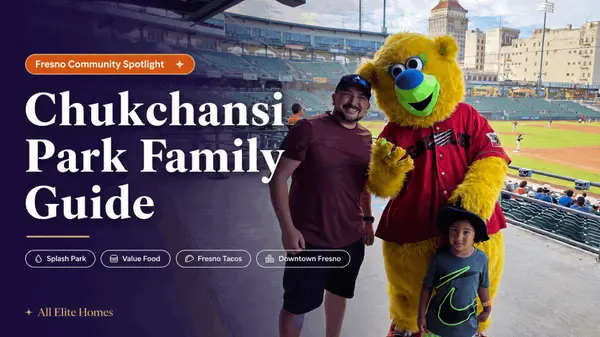
Clear-bag rules and cameras at Chukchansi Park do not automatically make the ballpark feel less welcoming. Many visitors understand the purpose when a safeguard is visible, proportionate, and connected with a recognizable safety need.
Police databases still deserve greater scrutiny than a retail security camera. Law enforcement has the authority to stop, search, detain, and arrest. That power makes accuracy, legal purpose, retention, and accountability especially important.
Acknowledging that distinction does not require treating every public-safety camera as an unacceptable intrusion.
Fresno can require strict boundaries around its Flock network while residents also question how many years of location, shopping, search, device, social, and image information are stored elsewhere, and how those records may be monetized, licensed, breached, or disclosed.
Across our team at All Elite Homes, we favor proportional concern. The better question is not which technology produces the most alarming headline. It is what information is collected, who controls it, how long it survives, and what real-world power can be exercised with it.
Eight Safeguards Fresno Should Require for Continued Use
The choice does not have to be unrestricted surveillance or removing every camera. Fresno can preserve a targeted investigative tool while imposing conditions that reduce misuse and strengthen public confidence.
- Defined public-safety purposes
Limit searches to documented criminal investigations, stolen vehicles, endangered people, and other clearly authorized safety needs. - Individual role-based accounts
Prohibit shared credentials, review permissions regularly, and remove access promptly when duties change. - Specific search justification
Require a case number, offense category, or detailed operational reason rather than a vague entry such as "investigation." - Human verification before enforcement
Confirm the plate, issuing state, vehicle, database status, and surrounding facts before relying on an alert. - Short routine retention
Preserve Fresno's 30-day limit and separately explain how exported case evidence is stored and retained. - Narrow California-only sharing
Prohibit unauthorized federal or out-of-state access and prevent partner agencies from conducting indirect searches for unauthorized requesters. - Meaningful risk-based audits
Review more than a few random searches and prioritize unusual volume, repeated targets, after-hours access, and searches without clear case connections. - Public reporting and evaluation
Publish aggregate outcomes, false-alert information, complaints, misuse findings, sharing relationships, audit results, and interim evaluation data before renewal.
In Georgia, internal audits have led to multiple officers being fired or arrested over allegations that they used license-plate-reader systems for personal or unauthorized reasons. Those cases do not suggest Fresno officers committed the same conduct. They demonstrate why detailed audit logs and active review matter.
The Georgia cases also demonstrate something important in Flock's favor: when searches are tied to individual users and agencies examine the logs, alleged misuse can be identified and investigated.
Across our team at All Elite Homes, we want residents to trust the tools operating in their city rather than simply be instructed to trust them. Clear boundaries protect residents, responsible officers, and the long-term legitimacy of the program.
What Fresno Residents Should Watch Before Any New Flock Commitment
Will the monthly audits become public?
Residents should be able to see search totals, the number reviewed, policy violations, partner access, unusual activity, and corrective action.
Will interim results arrive before renewal?
The final grant evaluation is due in 2027. Fresno should release meaningful interim results before committing to another multiyear agreement.
What counts as a successful result?
The city should report verified alerts, stolen vehicles recovered, endangered people located, cases materially advanced, false alerts, and investigative time saved.
What happens when someone violates policy?
Renewal documents should define investigation procedures, access removal, disciplinary consequences, notification requirements, and public reporting.
Across our team at All Elite Homes, we believe a renewal decision should be based on demonstrated public-safety value and enforceable protections, not fear, marketing, or assumptions from either side.
Safer Streets, Stronger Trust, and the Fresno We Want
We do not only care about what homes cost. We care about whether the communities surrounding those homes feel safe, connected, trusted, and welcoming.
Fresno is a city worth caring about. Its neighborhoods, parks, restaurants, schools, local businesses, public events, and families are part of why we continue to believe in the Central Valley.
Our guide to what family life in Fresno actually looks like examines that quality-of-life question beyond a list of home prices or attractions.
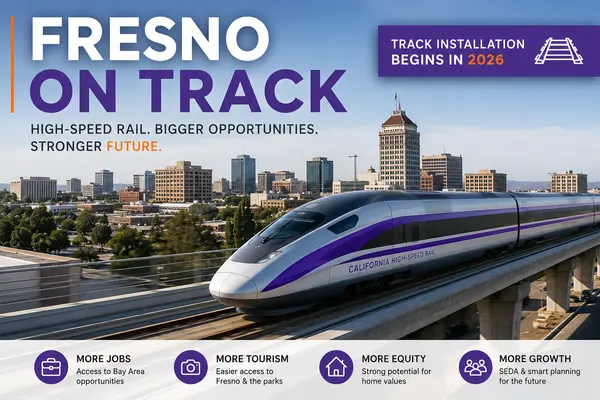
We also pay attention to long-term investments that may shape Fresno's future. Our analysis of what high-speed rail could mean for Fresno's jobs, access, and growth reflects the same belief: Fresno's future depends on housing, infrastructure, safety, opportunity, and community confidence developing together.
Flock did not appear because Fresno suddenly became fascinated with cameras. It exists because investigators face a practical problem: vehicles move quickly, eyewitness descriptions are incomplete, violent retaliation can happen rapidly, and relevant evidence may disappear before investigators know where to look.
If a carefully governed system helps locate an armed suspect, recover a kidnapped child, find a stolen vehicle, or interrupt retaliation before another shooting occurs, we believe that value matters.
Our hope is not that Fresno eventually needs more cameras. Our hope is that shootings, kidnappings, vehicle thefts, and violent retaliation become rare enough that the cameras have increasingly little to find.
Fresno's routine Flock record reportedly looks back 30 days. The commercial internet may remember what we searched for, what we purchased, where our devices traveled, who we interacted with, and what held our attention for years. Are we scrutinizing both systems with the seriousness they deserve?
One system exists primarily so investigators can return to recent evidence after something happens in our city. The larger commercial ecosystem exists to understand, predict, personalize, influence, and monetize the person behind the screen.
Both categories of information can potentially become available to law enforcement through different legal or operational routes. One carries direct government power. The other can create a much richer and longer-lasting digital identity.
Flock should not operate without oversight. Based on Fresno's stated controls and reported investigative value, however, it may deserve careful governance more than reflexive fear.
The question is not whether public safety or privacy must lose. It is whether Fresno can protect both, and whether we ask the companies and devices in our pockets the same difficult questions we ask of the camera on the street.
Across our team at All Elite Homes, we are for safer streets, trusted institutions, accountable technology, and a Fresno that residents are proud to call home.
Fresno Flock Camera Questions, Answered
Do Fresno's Flock cameras use facial recognition?
Fresno officials and Flock say the automated license-plate-reader system discussed in this article does not use facial recognition. It records plates, vehicle images, visible vehicle characteristics, time, and camera location.
Can a Flock camera identify the driver?
No. The camera records a vehicle sighting, not the identity of the person driving. Police need additional evidence to establish who was operating the vehicle.
Do Flock cameras continuously track every car?
Each camera records a point-in-time sighting as a vehicle passes a fixed location. It is not live GPS tracking, although searches across a large network may reconstruct portions of a vehicle's travel.
Can ICE access Fresno's Flock camera information?
Chief Mindy Casto has said Fresno does not share Flock information with ICE or other federal agencies. Flock says ICE has no direct platform access and federal sharing is disabled by default. Oversight should also address indirect searches performed by partner agencies.
How long does Fresno keep routine Flock information?
Fresno says routine sightings are deleted after 30 days unless the information is preserved for an active investigation. Exported case information may follow separate evidence and records-retention rules.
Can a Flock alert alone justify a stop or arrest?
A Flock alert should be treated as an investigative lead. Officers should verify the plate, issuing state, vehicle description, database status, and relevant case information before acting.
Did Flock cause Fresno's decline in shootings and murders?
The available information cannot establish that Flock caused the decline. Fresno's improvement reflects several policing, prosecution, prevention, investigative, and community efforts. Fresno Police nevertheless says Flock has assisted many recent homicide and shooting investigations.
Should Fresno continue using Flock cameras?
Continued use may be justified when the system demonstrably assists serious investigations and remains subject to short retention, narrow sharing, role-based access, human verification, public reporting, meaningful audits, interim evaluation results, and consequences for misuse.
Across our team at All Elite Homes, we believe an honest answer can support effective policing without dismissing privacy concerns, and can demand accountability without treating every officer or local agency as untrustworthy.
Change the Policy Through Participation, Not Destruction
If you want Fresno to keep Flock, strengthen its safeguards, or discontinue the program, vandalism is not the answer.
Ask for the audits. Review the interim evaluation. Attend public meetings. Contact your councilmember. Submit public comment during the budget and contract-renewal process.
And when local elections arrive, vote for leaders whose judgment on public safety, privacy, transparency, and accountability reflects your own.
Fresno deserves safer streets and trusted institutions. Whether Flock remains, changes, or eventually has less crime to find should be decided through evidence, transparency, and civic participation, not vandalism or fear.
Categories
Recent Posts


GET MORE INFORMATION
