

Fresno Tule Fog: What Homebuyers Should Know About Winter Commutes
Why the valley gets such dense fog, what really helps behind the wheel, and how your address can change the winter morning drive.
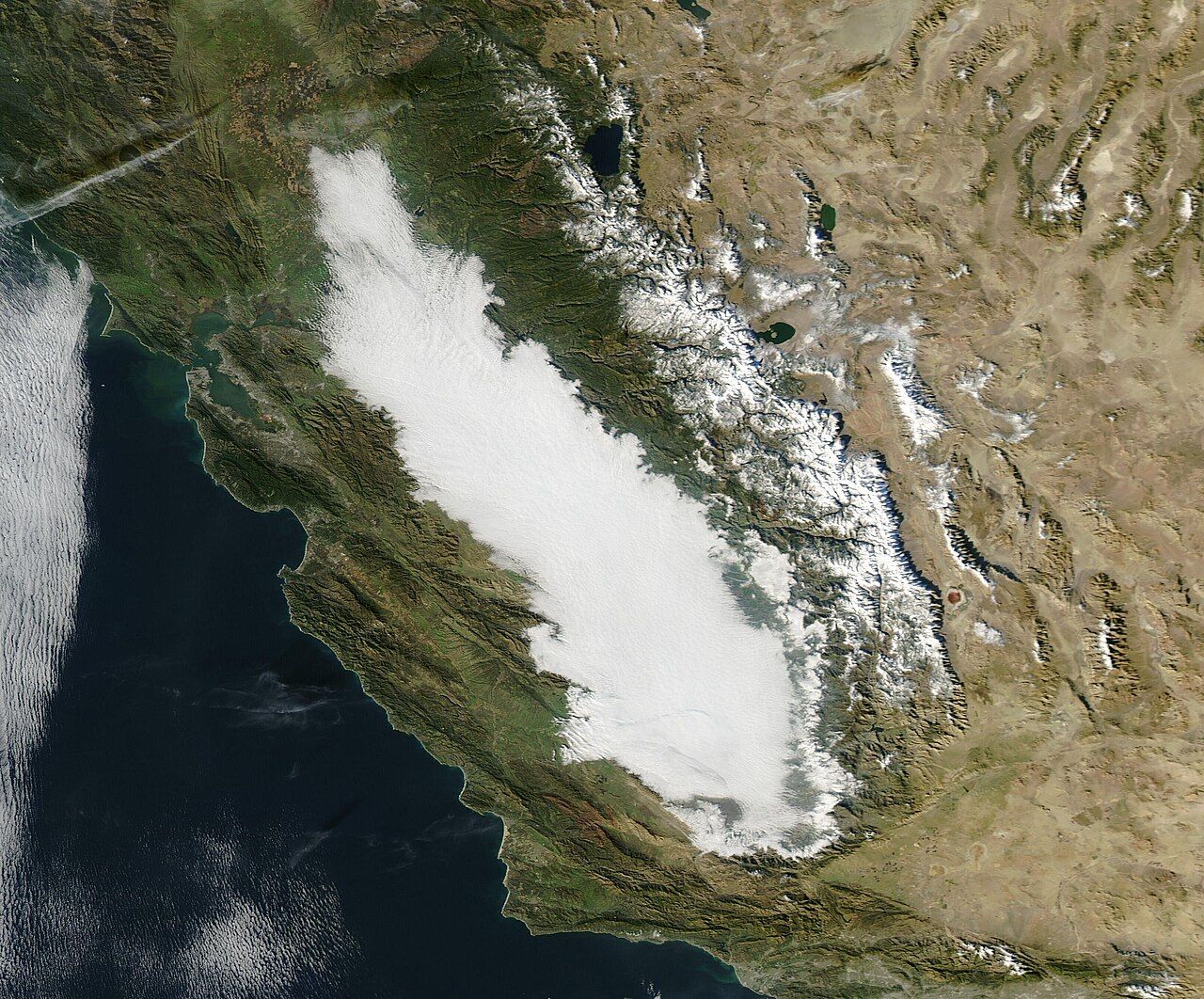
Quick answer: Tule fog forms when cool, moist air gets trapped near the floor of California's Central Valley. It can cut driving visibility sharply, sometimes for hours. Fresno-area buyers should look beyond a home's location to the roads, elevation changes and departure times that shape the winter commute.
On November 23, 2026, I saw fog for the first time this season. It reminded me how rarely buyers test a winter commute.
Two homes with similar afternoon drive times can create very different winter mornings. It's worth testing before you make an offer.
What is tule fog, and why does Fresno get it?
It's tule fog (pronounced TOO-lee), named for the tule reeds that once filled the valley's wetlands. The National Weather Service calls it a special kind of radiation fog: the ground cools overnight, the moist air just above it cools to its dew point, and tiny droplets form near the surface.
Rain leaves moisture in the valley. Clear skies and light winds let the ground cool overnight. The Coast Ranges and the Sierra Nevada, together with temperature inversions (warmer air sitting on top of colder air), can hold the fog near the valley floor. The satellite image above shows the result.
Tule fog
Develops near the ground in cool, calm inland conditions. It can settle across broad stretches of the valley floor and linger when the air stays stable.
Coastal fog
Usually forms when moist air passes over cooler ocean water and drifts inland with marine air. It forms and moves differently from valley radiation fog.
Tule fog isn't inherently more dangerous than other fog. The risk is how dense and persistent it can become, especially on fast roads.
A surprising detail: A 2019 UC Berkeley study in the Journal of Geophysical Research: Atmospheres found Central Valley fog fell about 76% between 1980 and 2016, and linked the long-term decline mainly to cleaner air. That trend doesn't make any particular winter morning fog-free.
Why can Fresno's tule fog be so dangerous for drivers?
Drivers may see stopped traffic, a turning vehicle or an intersection too late to react. Fog is often patchy, so a clear stretch doesn't guarantee clear road ahead.
Rural roads may have fewer lights and higher speeds; freeways can develop sudden queues. City streets bring intersections, pedestrians and frequent turns.
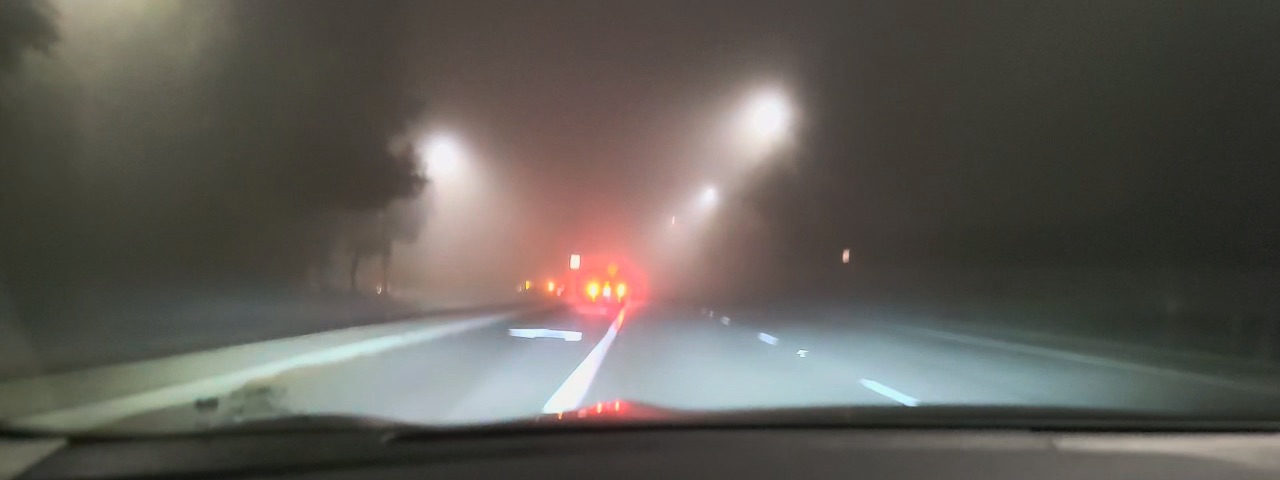
What speed means when visibility drops
Travel distance only, before any braking. Constant speed on a level road; miles per hour × 1.467 = feet per second. An illustration, not a safe-speed recommendation.
The California DMV handbook says to drive slowly and make sure you can stop within the space you can see ahead. It also says it's best to avoid driving in heavy fog. If you can't see far enough to stop, even driving under the posted limit may not be enough: postponing the trip or getting safely off the road can be the better choice.
Does living in the city, countryside or foothills change your fog commute?
It can, but no area is reliably fog-free or universally safer. Terrain, departure time and road design matter more than a city name.
| Where you live | What to look at on winter drives |
|---|---|
| Established Fresno neighborhoods | Cross-town arterials such as Herndon or Shaw, signalized intersections, street lighting and alternate surface streets. |
| Clovis | Whether work trips depend on Highway 168, busy arterials or routes into Fresno, and your likely departure times. |
| Rural Fresno and Madera County | Unlit segments, approach speeds at rural intersections, longer distances between services and fewer practical detours. |
| Riverstone and Tesoro Viejo corridors | How much of the daily trip uses Highway 41 or connecting roads, especially in early-morning traffic. |
| Friant and Millerton foothills | Elevation changes, curving approaches and the chance of driving down from clear air into valley fog. |
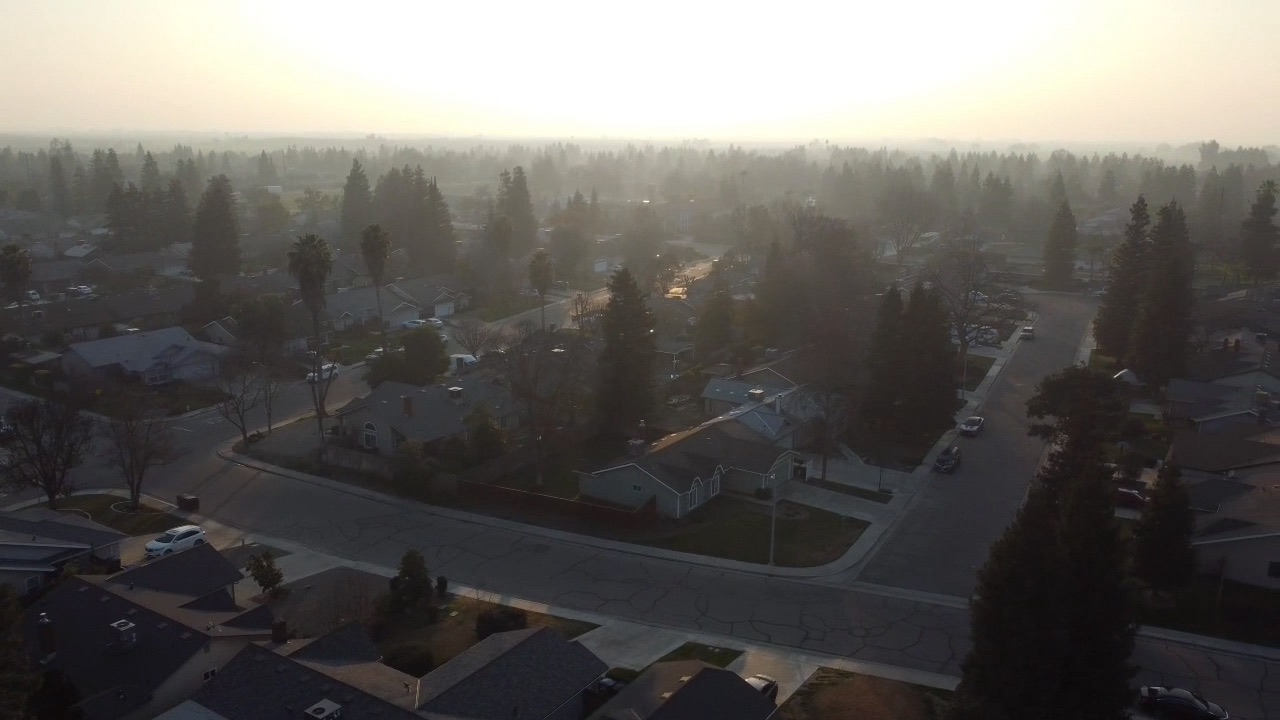
Higher ground can sit above a shallow fog layer, but foothill roads can still be foggy, and city addresses aren't immune either.
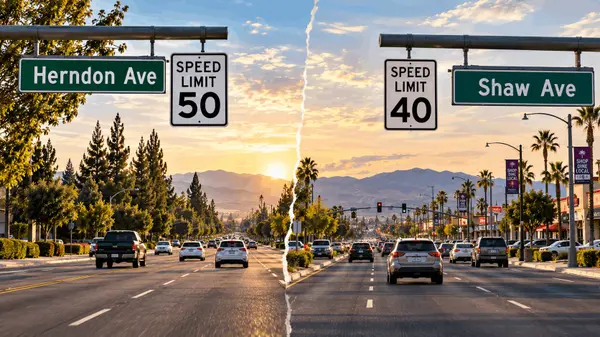
For more on how road design shapes everyday Fresno travel, see our Herndon vs. Shaw speed-limit guide. If foothill living interests you, our Friant Ranch guide covers other practical trade-offs of that setting.
Can radar, LiDAR or cameras help a car see through fog?
Vehicle sensors respond differently to fog, but none of them removes the limits of visibility.
- RadarUses radio waves and is generally less affected by fog droplets than optical sensors. It still has limits in detecting, classifying and tracking hazards.
- LiDARUses laser light to measure distance. Fog droplets scatter and weaken the signal, reducing effective range.
- CamerasDepend on visible detail such as vehicles and lane markings. Dense fog can hide the information they need.
Don't use adaptive cruise control as a fog strategy. A one-, three- or five-car following setting is not a substitute for choosing your own safe following distance. Many systems rely partly on cameras, and manufacturers warn about poor visibility: Ford, for example, lists fog among the conditions that can limit BlueCruise. Check your own owner's manual.
Automatic emergency braking is a backup, not a guarantee that a hazard will be detected.
What are five practical tips for driving in tule fog?
These tips supplement DMV guidance and your owner's manual. In very dense fog, postponing the trip may be safest.
- 1. Use low beams; add fog lights if you have themHigh beams reflect off the droplets and create glare. Low beams aim down, and low-mounted fog lights spread a short, wide beam over the road just ahead. Fog lights are supplemental: never drive with only fog or parking lights. California also requires low beams whenever fog makes you use your wipers, so turn them on even if automatic lights haven't.
- 2. Slow down and leave more spaceDrive slowly enough to stop within the road you can see, and leave extra room. No fixed number of car lengths is safe in every fog. Never speed up just to keep another driver's taillights in view.
- 3. Check conditions and pick a route before you leaveLook at National Weather Service advisories and Caltrans QuickMap for closures, traffic and road cameras. Plan alternatives, but remember conditions change quickly. Don't check your phone while driving.
- 4. Keep the glass clear and read the road carefullyClean the windshield, use the defroster and wipers, and replace worn blades. Follow lane markings and scan ahead instead of fixating on taillights. Avoid unnecessary passing or lane changes.
- 5. Know when to stop drivingIf visibility drops to near zero, the National Weather Service says to turn on your hazard lights and pull into a safe place such as a parking lot. Never stop in a live lane. Once stopped, it advises turning off all lights except the hazards, setting the parking brake and taking your foot off the brake pedal so drivers behind don't follow your taillights. Wait for conditions to improve.
What should buyers check before choosing a Fresno-area commute?
Alongside bedrooms, lot size and price, add a realistic winter-route check: not just how long the commute is, but how it works.
- Test the real departure time. An afternoon drive won't reflect an early winter commute.
- Drive the whole route. Include local streets and freeway on-ramps.
- Check alternatives. Is there another practical route to work or school?
- Consider the drive home. Think about lighting and turns after dark.
- Revisit in winter. One test won't predict a season, but it helps.
We don’t sell neighborhoods to clients; we find the right neighborhood for clients.Dani Cabrera, Team Lead & Director of Outreach, All Elite Homes
That means weighing a beautiful house alongside the daily routines that make living there work. Start by comparing homes in Clovis and homes in Fresno, or read our guide to living in Fresno and Clovis, then test the commute from any address you like.
Frequently asked questions about Fresno tule fog
When is tule fog season in Fresno?
Mainly late fall through winter, when nights are cooler and the valley has enough moisture. The National Weather Service says tule fog produces exceptionally thick fog on many nights from late October through February, though it can happen outside that window. A specific morning's forecast is more useful than the calendar.
Is tule fog different from normal fog?
Tule fog is a regional name for a type of radiation fog common in California's Central Valley. The droplets aren't different from other fog. What makes it notable is the valley's geography, persistent winter weather patterns and how severely it can cut visibility over large areas.
Is fog worse in rural Fresno County than in the city?
Not consistently, in every place or on every day. Open land, moisture and local temperatures affect fog, while lighting, intersections and speeds affect the drive. Rural commutes may involve more unlit high-speed roads; city routes have their own traffic and crossing challenges. Evaluate the actual route rather than assuming one setting is always clearer.
Are homes in the foothills above tule fog?
Some higher locations sit above a shallow valley fog layer during certain events. Elevation alone isn't a guarantee, and roads heading down toward Fresno or Clovis can enter dense fog even when the home is in clear air. Consider the full daily drive.
Do fog lights really help?
Properly aimed fog lights can light the nearby road and its edges better because they sit low and throw a broad, low beam. They don't make distant hazards visible in very dense fog. Use them with low-beam headlights, and never use fog lights alone.
Can radar-equipped cars drive safely through dense fog on cruise control?
No sensor or driver-assistance feature makes dense fog safe. Radar generally copes with fog better than cameras or LiDAR, but cars can still miss or misread hazards, and many systems rely on several kinds of sensors. Follow the manufacturer's warnings and stay in direct control.
What should I do if visibility drops to almost zero?
Don't stop suddenly in a traffic lane. Slow down carefully, turn on your hazard lights and pull into a safe place away from moving traffic, such as a parking lot. Once stopped, the National Weather Service advises leaving only the hazard lights on, setting the parking brake and taking your foot off the brake. Wait for conditions to improve.
Find a home that fits the drive, too
Comparing Fresno, Clovis, Madera or foothill communities? Tell us where you need to go, when you leave and what matters most at home. We'll help you compare areas and the questions worth investigating, not sell you on one neighborhood.
Sources
- National Weather Service: radiation fog and tule fog
- National Weather Service: driving in fog
- California DMV Driver's Handbook: fog or heavy smoke
- Gray et al. (2019), Journal of Geophysical Research: Atmospheres: Central Valley fog trends
- Ford: BlueCruise limitations
- Caltrans QuickMap: road conditions and cameras
- NASA MODIS image, November 26, 2025 (via Wikimedia Commons)
Driving guidance here is general education, not a substitute for current official advisories, California law or your vehicle owner's manual.
Related reading
Categories
Recent Posts


GET MORE INFORMATION
